
PVC Pool Membrane Tips & Info
Fixing Pool Leaks with PVC Membrane Repair Solutions
Pool leaks don't announce themselves with fanfare. They show up as higher water bills, soggy patches around the deck, or that nagging feeling your water level drops faster than it should. Most pool owners assume it's evaporation or splash-out. Sometimes it is. But when it's not, you're looking at a structural issue that compounds fast if ignored.
PVC membrane repair isn't the only fix out there, but it's one of the few that actually lasts. Patching with epoxy or cement might buy you a season. A membrane system? That's a decade-plus solution when installed right. The difference comes down to whether you're covering a crack or sealing the entire surface against future failure.
Where Leaks Actually Start
Leaks don't pick favorites. They show up in the shell, around fittings, through plumbing lines, even under coping stones. Concrete pools crack as they settle. Fiberglass develops stress fractures. Vinyl liners tear at seams or puncture from debris. Every material has a weak point, and time finds it.
Chemical exposure accelerates the process. So does freeze-thaw cycling, ground movement, and poor initial construction. A small crack today becomes a gushing problem next month. The longer you wait, the more expensive the fix gets—and the more damage spreads to surrounding structures. Professional pool repairs can address these issues before they escalate into major structural failures.
What Makes PVC Membranes Different
PVC membranes aren't glorified pool liners. They're engineered waterproofing systems made from reinforced polyvinyl chloride that resists UV degradation, chemical attack, and physical wear. The material is flexible enough to conform to complex shapes but tough enough to handle constant water pressure and temperature swings.
Unlike traditional liners that hang loose or stretch over time, PVC membranes are heat-welded at every seam. That creates a monolithic barrier with no weak points. No glue that fails. No overlaps that separate. Just one continuous sheet between your water and whatever's underneath. Understanding why a liner solution works can help you make informed decisions about your pool's waterproofing needs.
Why This Approach Works Long-Term
Temporary fixes fail because they don't address the root problem. You patch a crack, but the substrate keeps moving. You seal a fitting, but the surrounding material deteriorates. PVC membranes sidestep all that by creating an entirely new waterproof layer that doesn't rely on the old surface staying intact.
Here's what that gets you:
- Complete waterproofing across the entire pool surface, not just problem areas
- Resistance to chlorine, salt, and pH fluctuations that eat through other materials
- Flexibility that accommodates ground movement without cracking
- UV stability that prevents degradation from sun exposure
- Algae and mold resistance built into the material itself
Installation Isn't a Weekend Project
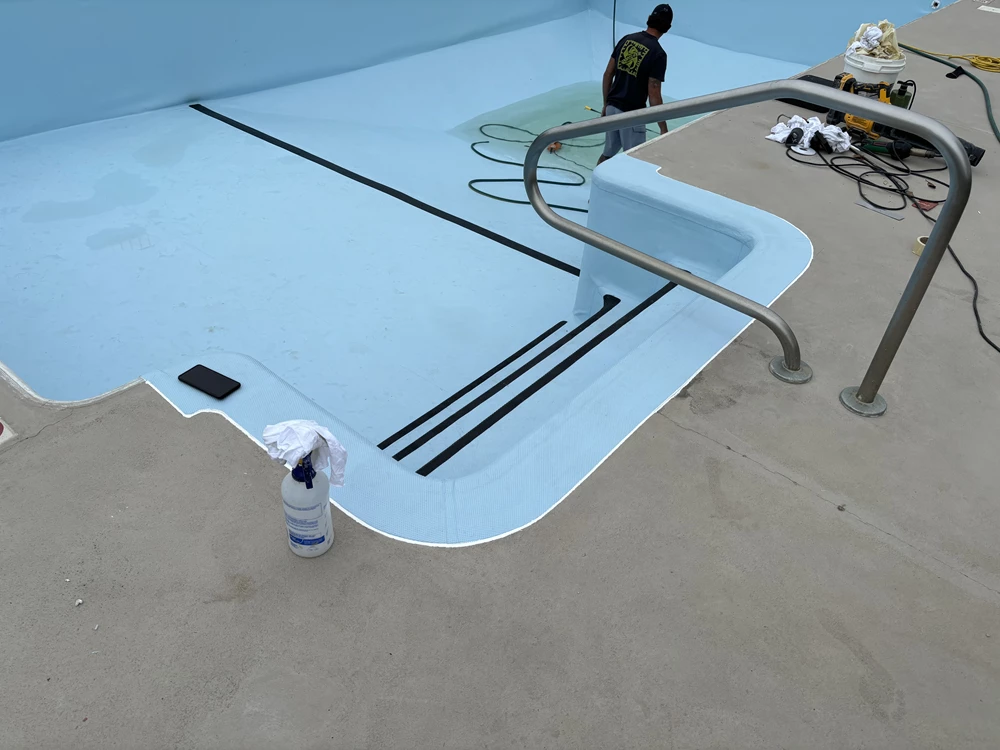
Getting a PVC membrane installed right requires precision and specialized equipment. The pool gets drained and prepped. Every surface is cleaned, smoothed, and inspected. The membrane is custom-cut to fit your pool's exact dimensions, including steps, benches, and radius corners.
Seams are welded using hot-air tools that fuse the material at a molecular level. Done correctly, those welds are stronger than the membrane itself. Fittings get integrated with flanges and gaskets designed specifically for PVC systems. The whole process takes days, not hours—but the result is a pool that's structurally sound and leak-free. For major overhauls, retrofit installations provide comprehensive solutions that transform existing pools with modern waterproofing technology.
Common Mistakes That Undermine Repairs
Most failures happen during prep or installation, not because the material itself is flawed. Skipping surface preparation leaves voids where water can migrate. Rushing seam welds creates weak spots. Using incompatible adhesives or fittings introduces failure points that show up months later.
Here's where installations go sideways:
- Inadequate surface cleaning that prevents proper adhesion
- Poorly welded seams that separate under pressure
- Incorrect membrane thickness for the pool's size and usage
- Failure to address underlying structural issues before installation
- Mixing incompatible materials or fittings with the PVC system
Choosing Someone Who Knows the Work
Not every pool contractor has experience with PVC membrane systems. This isn't a skill you pick up from a YouTube tutorial. It requires training, the right tools, and a track record of successful installations. Ask for references. Look at completed projects. Verify they're using manufacturer-approved materials and methods.
A qualified installer will inspect your pool thoroughly before quoting. They'll identify any structural issues that need addressing first. They'll explain material options, warranty coverage, and realistic timelines. If someone promises a quick fix or lowballs the estimate, that's a red flag.
What Happens After the Membrane Goes In
Once installed, PVC membranes require less maintenance than most pool surfaces. Standard cleaning and chemical balancing apply, but you're not dealing with the constant patching, resurfacing, or liner replacements that plague other systems. The membrane resists staining, doesn't harbor algae in porous surfaces, and holds up under heavy use.
Routine care keeps it performing:
- Regular brushing to prevent debris buildup
- Balanced water chemistry to avoid unnecessary stress on the material
- Periodic inspections of fittings and seams for early detection of issues
- Prompt removal of sharp objects that could puncture the surface
- Professional assessment every few years to catch wear before it becomes a problem
When Repair Beats Replacement
If your pool shell is structurally sound but leaking, a PVC membrane makes more sense than tearing everything out and starting over. You get a brand-new waterproof surface without the cost, disruption, or timeline of full reconstruction. The membrane can even refresh the pool's appearance with color and pattern options that weren't available when it was originally built.
But if the shell itself is failing—major cracks, shifting, or deterioration—you need to address that first. A membrane won't fix structural collapse. It will, however, protect a repaired shell from future water intrusion and extend its life significantly. For residential pools, PVC membrane systems offer homeowners a durable, long-lasting solution that maintains both function and aesthetics.
Cost Versus Value Over Time
PVC membrane installation costs more upfront than slapping on a patch or dropping in a cheap liner. But compare that initial expense to the cumulative cost of repeated repairs, water loss, chemical waste, and eventual full replacement. The membrane pays for itself through longevity and reduced maintenance.
Factor in these long-term savings:
- Elimination of recurring leak repairs and associated labor costs
- Reduced water bills from stopping continuous loss
- Lower chemical usage due to better surface resistance
- Extended pool lifespan without major structural interventions
- Increased property value from a well-maintained, leak-free pool
Stop Chasing Leaks and Seal the Problem
Leaks don't fix themselves. They get worse. Every gallon you lose is money down the drain, and every day you wait increases the risk of collateral damage to decking, equipment, and surrounding structures. PVC membrane repair isn't a band-aid—it's a permanent solution that addresses the problem at its source and keeps it from coming back.
We've seen too many pool owners burn through cash on temporary fixes that fail within months. The smart move is investing in a system that works once and lasts for years. If your pool is leaking, get it inspected by someone who understands membrane systems and can give you a real assessment. The repair might cost more than you hoped, but it'll cost less than ignoring the problem until the pool becomes unsalvageable.
Let’s Make Your Pool Worry-Free
We know how frustrating it is to deal with persistent leaks and endless repairs. Let’s put an end to the cycle with a PVC membrane solution that stands the test of time. If you’re ready to protect your pool and enjoy peace of mind, give us a call at 843-480-3577 or get a quote today. Together, we’ll make sure your pool stays watertight for years to come.
‹ Back
Recent Posts
-
How Well Do PVC Pool Membranes Hold Up to Daily Use?
September 29, 2026
-
When Should You Repair or Replace a PVC Pool Membrane?
September 15, 2026
-
Is Your Residential Pool Losing Water Around the Edges?
September 1, 2026
-
How Indoor Pools Benefit from PVC Membrane Installations
August 18, 2026
-
Are PVC Membrane Liners a Good Fit for Water Parks?
August 4, 2026

.png)